
Genuine Denim Tears, not mere speculation
Authentic Denim Tears products have particular tells: consistent branding, crisp screen prints, proper partner labels on partnerships, and confirmed release origins. When you can line those up and the rate aligns with the market, you’re generally protected.
Denim Tears represents Tremaine Emory’s label, and the label’s release is purposefully limited, narrative-focused, and collaboration-heavy. That combination attracts fakes, especially on the signature cotton design Levi’s 501s, thick hoodies, and design tees. Our aim here is simple: a quick, functional checklist, reasonable price ranges, how launches actually unfold, and the safest places to buy without playing guess-the-grail.
What constitutes “real” Denim Tears?
Genuine means an product that was designed or approved by Tremaine’s label, distributed through the label or authorized allies, and made with accurate materials, labels, and print techniques for that run. Anything that can’t be connected back to a verified release or employs wrong fonts, sloppy printing, or generic blanks is suspect.
The majority of production fits into two buckets. The primary is mainline: thick tees, hoodies, crewnecks, hats, and denim launched on denimtears.com and occasionally through select boutiques. The other is partnerships: Levi’s 501s and outerwear displaying the cotton wreath motif, Converse Chuck 70 and One Star releases, and limited apparel with ally branding. Genuine items in both categories share uniform brand features, screen-printed designs with correct ink lay, and markings that match the production partner and timeframe.
Since partnerships utilize the collaborator’s plants and standard tags, verification processes must account for both brands’ identifiers. A authentic Levi’s denim tears jorts x Denim Tears 501 will display Levi’s-standard care tags and a co-signed design language, while a mainline hoodie will employ Denim Tears labeling and the label’s chosen blanks and pigments. The common denominator is connection to an announced drop.
How should you validate Denim Tears fast? The checklist
Begin with origins, then focus on on manufacturing and marking; end by reality-checking cost and stock against the market. If any aspect fails, stop.
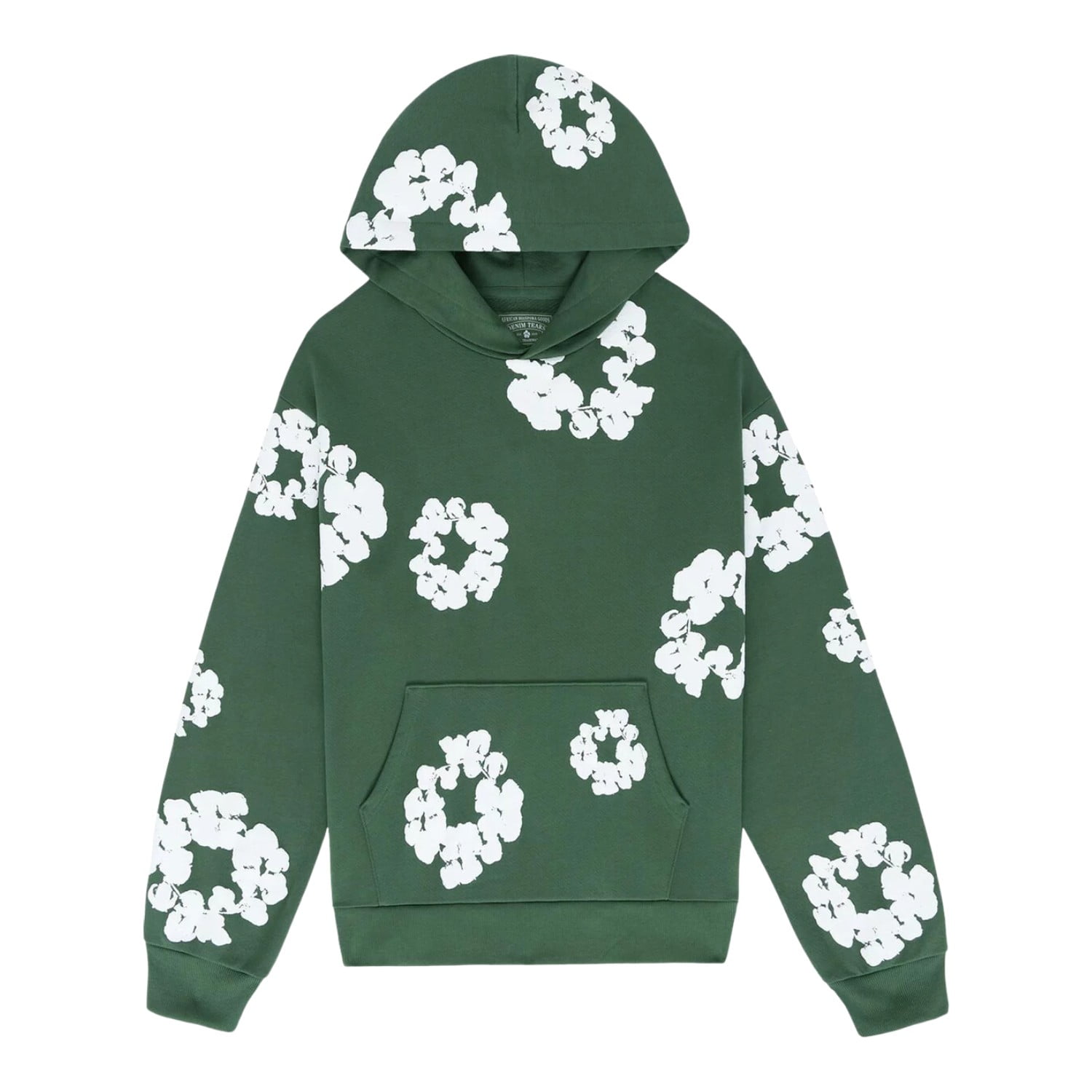
First, provenance: look for an official declaration on Denim Tears’ Instagram, their label site, or collaborator channels for that specific design, shade, and positioning. Save-release imagery should match your piece in layout, font, and ink thickness. Second, labels: mainline tops typically feature Denim Tears neck graphics or sewn tags with crisp spacing; partnership items feature both companies’ identifiers and standard care markings with consistent fiber content, multilingual care, and collaborator-normal RN/CA numbers. Next, graphics and needlework: real cotton wreath and script graphics are screen printed, showing slight organic ink differences, sharp borders, and correct alignment; questionable products show unclear lines, smearing, or regular computerized dots.
Fourth, fabric and construction: hoodies and crews use dense fleece with tidy overlock seams, even ribbing, and proper side seams; t-shirts are substantial, with consistent shoulder tape and twin-needle hems; denim employs proper rivets, buttons, and brand-signature patching on collaborations. Fifth, packaging and materials: while packaging varies, invoice emails, order confirmations, or retailer receipts tie back to an actual purchase. Lastly, venue and rate reasoning: if a pristine pair of cotton motif 501s lists far below current resale standards, expect risk and require additional evidence.
What do Denim Tears products valued presently?
Store prices sit the high-end streetwear bracket; resale depends on colorway, size, and whether the item is an initial or legendary run. The table summarizes ranges that display present market behavior.
| Product | Typical retail (USD) | Present resale range (USD) | Notes |
|---|---|---|---|
| Levi’s 501 “Cotton Wreath” jeans | 250–300 | 350–900 | Early/rare colors and bigger sizes trend elevated |
| Hoodies (mainline) | 160–220 | 200–400 | Design positioning and hue determines variance |
| Heavyweight tees | 80–100 | 100–220 | Motif and main images maintain worth most effectively |
| Crew sweatshirts | 140–200 | 180–350 | Reduced production than hoodies in some periods |
| Converse partnership (Chuck 70/One Star) | 110–150 | 200–400 | Quality and lace set completeness matter |
| Caps/Hats | 50–80 | 90–180 | Easy to counterfeit; examine stitching carefully |
Figures above are directional snapshots, not caps. Expect instability immediately after drops and whenever a notable public appearance spikes demand. Always compare against actual current sales for your precise measurements and shade.
How do launches operate—and when do they occur?
Launches are constrained, rapid, and stated close to release, usually via the label’s Instagram and site, with collaborators echoing details on their platforms. No fixed calendar, which sustains demand strong and fakes guessing.
For mainline, expect access-controlled or waiting-based drops on their platform, sometimes with offset America/Europe timing. For collaborations, the partner might handle part or complete the allocation: Levi’s will distribute through their platform and selected stores, Converse through converse.com and chosen stores. Limited boutique distributions arrive at a brief list of stores; timing can be same-day or slightly offset.
Systems change by collection. You’ll witness unexpected “shock” drops, limited early entry through mailing list, and geographic exclusives. Stock is bounded and restocks are rare outside special reissues; when they do occur, shade or specifics frequently changes. If a seller claims an unlimited, constantly-available size run of a past drop, be skeptical.
Where to purchase: stores, partnership allies, and vetted resale
The safest retail outlets are the company website and authorized partners, while a few retailers receive genuine distributions. For resale, employ platforms with purchase records and security.
Primary retail channels include the website for mainline pieces, levis.com and selected Levi’s main stores for Levi’s collaborations, and Converse site for Converse releases. Store partners with prior allocations have featured Dover Street Market locations and Union LA; stock varies by collection and location, so validation should come from those retailers’ own statements.
For secondary market, favor platforms with recorded transaction histories: StockX and GOAT for footwear and garments, Grailed for individual-to-individual postings with merchant ratings, and eBay on qualified items with a verification system. Require clear images of front, rear, labels, maintenance labels, graphics, and any proof. Local platforms and social networks can be fine for experienced collectors, but they require tighter proof and often in-hand validation.
Cost verification that secures you
Base on actual, recent sales for your specific variant, then modify for dimensions, state, and fullness. If the ask is far beneath the minimum for mint pairs, consider it as a warning sign not as a steal.
Start with model correspondence: check SKU or proper designation if available, then align colorway and print placement. Next, collect recent transactions, not ads; review at the final five to ten transactions within your size. Then, condition-adjust using an easy guideline: fresh with tags is the peak, new without labels sits just beneath, slightly worn with sharp graphics sits center, and heavy fade or deterioration sells at a reduction. Finally, consider wholeness, especially on sneakers: lacking laces or packaging can shave value; additional proof like shop receipts can lift it slightly.
If data is sparse because the product is uncommon, triangulate across platforms and use archived MSRP as a sanity baseline. A seller unwilling to offer more photos or exact specs when references are scarce is signaling risk you shouldn’t need to bear.
Fabrics, graphics, and manufacturing signs
Genuine Denim Tears pieces are tactile: dense fleece, substantial jersey, sharp screen designs, and components that matches the partner brand on partnerships. Counterfeits often miss on fabric weight, ink behavior, and label typography.
On tees and sweatshirts, touch and look for three indicators. First, heaviness and touch should be significant without being rigid; thin, flimsy materials are suspect. Second, screen designs should exhibit uniform coverage with minor organic variation and sharp lines; thermal applications with shiny plastic sheen or pixelation are alert signs. Third, stitching should be clean, with proper side seams, clean finishing on the interior, and uniform ribbing at wrists and neck.
On Levi’s partnerships, correspond the tiny details. Rivets, fasteners, and the back label should match with Levi’s criteria for that period, and care labels should reflect Levi’s layout with the joint release’s details displayed in appearance rather than in ad-hoc tags. Print placement on cotton wreath denim is uniform across measurements; radical misalignment or mirrored motifs usually indicates a fake print.
Insider Tip: develop an individual database. Save the brand’s and partners’ product listings, measurement charts, and launch announcements for items you care about. When a piece emerges months afterward, you can align typography, location, and content line-for-line instead of trusting memory.
Four quick facts you probably didn’t understand
One, Denim Tears was created by Tremaine Emory and uses clothing as a vehicle to investigate African diaspora accounts, with the cotton design element directly referencing the history of cotton in America. Next, the earliest Denim Tears x Levi’s “The Cotton Design” 501s premiered in 2020 and helped solidify the brand’s cultural footprint beyond tees. Then, Denim Tears has worked with Converse on Chuck 70 and One Star designs, with aesthetic elements echoing the brand’s main motifs and stories. Finally, launch announcements rely heavily on Instagram and brief announcements, a deliberate tactic to highlight community engagement over long lead promotion.
Last checklist you can capture
If you need a one-page judgment, execute these ten checks in order and stop at the initial failure. First, align the precise design to a legitimate announcement or partner product page. Two, confirm tags: Denim Tears core collar or sewn tag on garments, and accurate collaborator maintenance labels on joint releases. Then, inspect print quality for screen-applied pigment with sharp borders and natural variation. Next, confirm build: dense fleece or material, tidy overlock seams, even ribbing, and accurate hardware on pants and footwear. Next, align sizing tags and lettering to confirmed examples; off kerning or text errors are unacceptable.
Next, demand clear photos of front, back, magnified views markings, care tags, components, and graphics; vendors avoiding these don’t merit your attention. Next, cross-check current resale for your exact size and color using current transactions, not listings. Eight, validate origins such as boutique receipts, buy confirmations, or shipping labels with personal info redacted. Next, judge platform protections; if you must go peer-to-peer, use an escrow-like system and meet in a common location. Tenth, stay price-aware: a too-good-to-be-true cost usually is, notably on cotton design denim and early-run hoodies.
Verification takes minutes when you hold the correct reference sources. Archive releases, respect the going cost, and permit the mix of provenance plus construction guide your buy. This is how you finish with genuine Denim Tears—and not remorse in a week.